Paris Motor Show 2012 opens to mild feelings again

Once again, the most famous car show in the world opens up with high anticipation, and once again, petrolheads around the world feel slightly disappointed.

It’s not as if there were no interesting cars on show. McLaren showed what their future F1, the P1 will look like, Renault unveiled their new Clio RS, Lexus showed off a rather cool concept, supposed to show what the future IS will look like, and VW unveiled the new Mk7 Golf GTI.
The usual suspects did what they did best, Peugeot once again showed the world they can make a supercar, but failing when they put a diesel engine in it, Toyota continued with their green weight-saving tech with the FT-Bh, Ferrari unveiled what the future Enzo chassis will look like, BMW continued their expansion on the wrong side, with a rival to the Mercedes B-class, and finally, Venturi took a step deeper in digging their own grave.

It’s all the same, and for a show that brings in so much media attention, I can’t help but feeling indifferent.

Don’t get me wrong, I love the Paris Motor show. I used to go there each time from 1998 to 2006. After 2006, I sort of gave up. Not because of the crowds and expensive tickets, but more because it did not make me feel excited anymore.

The last show I went to, in 2006, was all about hybrids and green tech. Guess what, as much as I love hydrogen technology, it certainly does not excite me the way a Lamborghini Murcielago does (or even the wacky Renault concepts of the past). It’s not because there are less cars coming out – if anything there are now much more per year-, it is mostly due to the fact that there are no more ground-brakingly exciting cars anymore. It’s all evolutions of existing cars, or new niches that are being explored. And when something new does come around, it tends to simply be a new exterior, with a slightly more fuel-efficient engine. I mean look at the Peugeot Onyx for example. The exterior is all new and frankly looks pretty good, but underneath? Well, it’s just a retired Peugeot 908 Le Mans car (no, it’s not cool. It would be cool if they produced it. Better yet, they should make the Citroen GT!).

Another reason why the Paris Motor show is less exciting? Simple, technology.
No, I do not mean green technology or even car technology, but Information Tech. Why? Well put it this way, back in 1998, the internet was still something new for the everyday household. I could not really go online to see pictures of the latest Bentley, as looking up the pictures and printing them would cost my parents valuable 56K internet time. So the average car enthusiast looked at car magazines when they came out, and car manufacturers had an easier time keeping their latest concept under wraps.
Today, however, everyone has at least 2 computers and endless access to online resources. Someone who knows someone may have a picture of the latest concept and might Tweet it or post it on their blog. As a result, Car manufacturers don’t even bother keeping their latest concept under wraps, and just show it off as soon as it is ready. The Paris Motor show is often where a new car makes its first public appearance, not the first time it is revealed; the internet is there for that. Look at the Mk7 Golf, it was revealed a week before Paris, so once it was at the show, it was old news, nothing exciting.
Or take the Jaguar F-type for example. Supposedly unveiled at Paris, but because of all the spyshots, we all knew what it was going to look like. The only surprise we get is the confirmation of what we all already knew. The reason the magic of the show is gone, is because the element of surprise is gone.
Sure, I can regain that element by living under the sand for
the next two years, but then, I won’t know what colour the Porsche 918 will be available in when it comes out. That is the problem with technology, we have access to everything, so we are surprised by nothing.

That said, if I had the chance, I think I would go to the Paris Motor Show this year, as two of the most exciting cars I desperately want right now are there: The Toyota GT86 and the Mk7 Golf GTI. Oh how I dread the day I have to choose between the two!

See some superb pictures of the show through my friend Deprem
Posted in News | Leave a comment

So, there’s a new Golf out…

38 years ago, the world discovered that golf no longer meant a game played by surgeons and lawyers. Volkswagen needed a replacement for their iconic Beetle. They had tried previously to change it, but enthusiasts would hear nothing of it. Then, in 1974, they decided to launch the Golf. Sure, the Beetle was still being made for nostalgia reasons, but the Golf was aimed at what the Beetle stood for: A small, affordable, reliable and practical car to power people, and motorize a whole generation. With its gorgeous body designed by Giorgetto Giugiaro, it was an instant success, following up to the three most famous letters in the alphabet: GTI. The Golf now was synonym with practicality, and, just like the Beetle was the definition of a car to a whole generation, the Golf became synonymous with the word car.

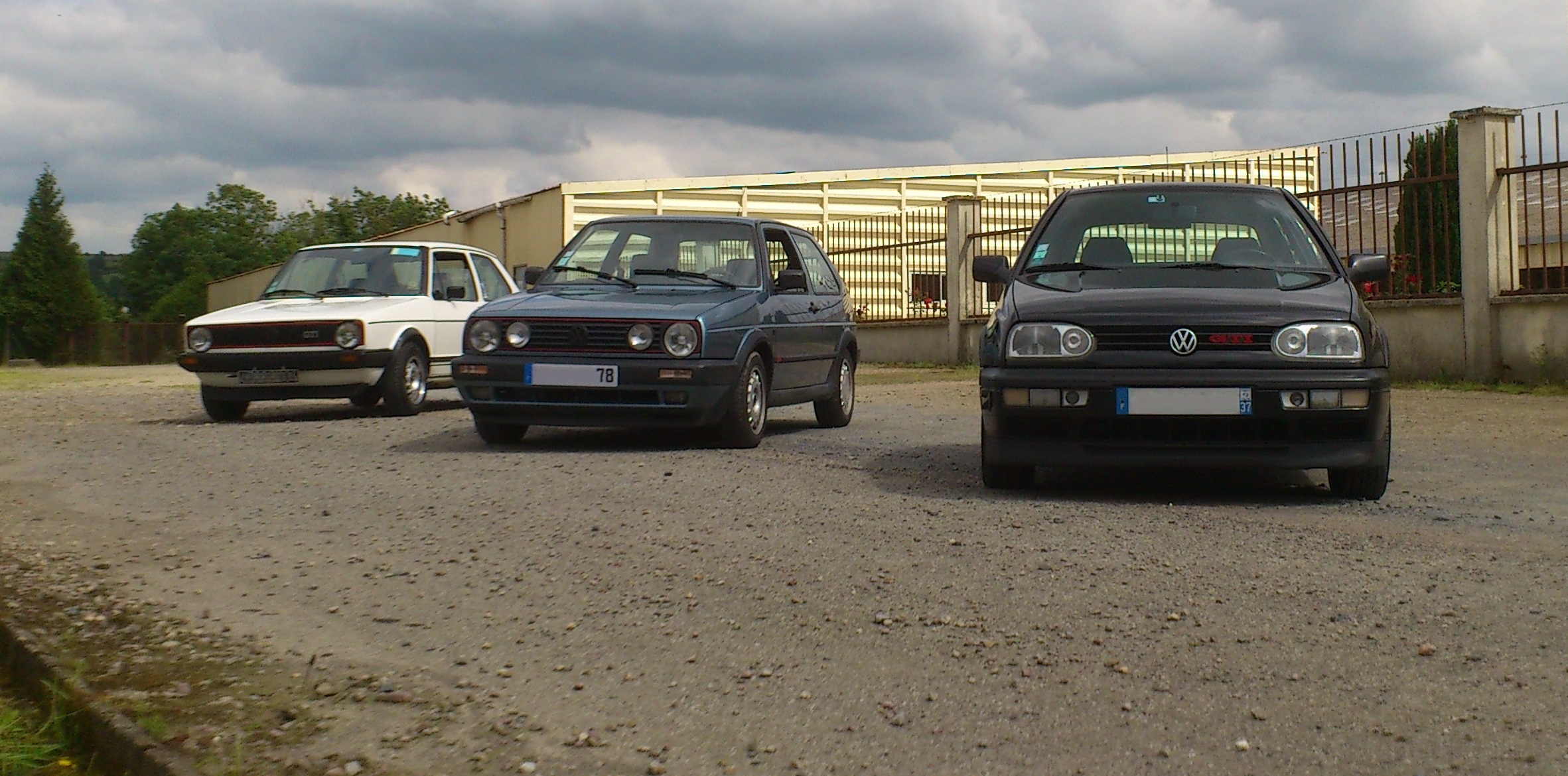
As they say, the rest is history, and the Golf grew to become one of the iconic cars of the 20th Century. Sure it was not all rainbows and roses, the Golf history is full of ups and downs. It all started with the uproar by fans when the Mk2 came out. The Mk2 may have been an excellent car, but it started the steroid trend of making each generation bigger than the last one. It was not all a loss though, each new Golf was more sophisticated, more comfortable, more practical. The sacrifice though was a big one, as newer versions became less fun. The Mk3 got even bigger, to the point where VW had to put a 174bhp VR6 engine, just to get the fun factor of a small 112bhp Mk1 GTI back.

This culminated with the Mk4, which is also known as the least reliable Golf of all time. Sad… (though VW did make up for it with the R32). With the Mk5, though, VW claimed to bring the fun back, and its claims seem to have been well founded with the latest incarnation of the GTI. The only issue was, that version was the most bloated Golf ever.

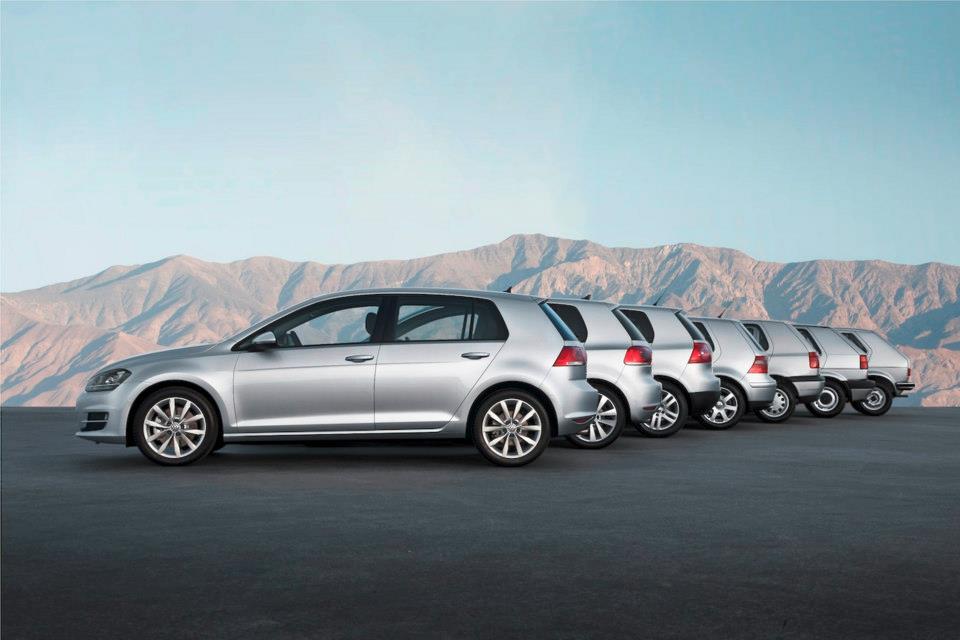
However, with the Mk6, people started to lament on the lack of evolution in the design, and with the announcement of the latest version of the Mk7, the lamentations seem legitimate. To someone who knows nothing about cars, the Mk7 looks just like a Mk6 Golf.

The problem is, VW design language is all about evolution, not revolution. If people like something, why change it? The reason VW can get away with only very mild changes to the exterior, is because they got it right the first time. Renault had to change its Megane completely because the version before it was a bit shocking. Now people say the latest version looks too much like a Golf. Guess what, the Golf is a benchmark, other cars can only compare themselves to it. The fact is, the Golf still remains one of the most sold hatchbacks in the world (almost 30 million cars sold so far), and the reason people buy it, is because they know exactly what they are getting: a car. The Golf is not a statement like a Citroen DS4, it is not spaceship like a Honda Civic, nor is it also a disappointment like a Peugeot 308. Yes, it does mean that the Golf is boring, but so is another VW product: The Porsche 911.

The thing is, the design of the Porsche 911, just like the Golf, has only evolved in 49 years, not changed. Personally, I cannot tell the difference between a 997 and a 991 from the front. The reason why the design never really changes, is because Porsche got it right the first time. Now, all other sports cars are compared to the 911, it is the benchmark, just like the Golf.

That said, saying there is no change in the Golf is about as true as Weapons of Mass Destruction.

For one thing, the Mk7 Golf is the first VW car on VAG’s new MQB platform. It is the same platform as the Audi A3, but the beauty of that platform, is that it allows endless customisation. No wonder almost every car in the Volkswagen group will be using it soon!

What this means also, and this is a first for almost 25 years, is that the new Golf is lighter than its predecessor! 100kg lighter to be precise. It may be bigger, more comfortable, more refined and all, but it can pull it off! The sharper styling helps conceal the bloated look a bit more, and the fact that it is lower than the Mk6 adds to that effect. Compared to this, the Mk3 looks very fat!

Because of the bigger size, the interior will be roomier and more comfortable. The redesigned dashboard looks great, even if a bit bland. But it is bland for a reason, the same reason the car never really changes on the outside, as it is made to please everyone. Red trim excites a few, grey trim is accepted by all afterall. As always, with a new Golf comes new toys. In terms of equipment, expect to find a new infotainement system with a huge touch-screen, wifi capability, and an electronic parking brake. Overall, the Mk7’s cabin will be a much better place to be.

In terms of engines, the usual range of petrol and diesels will be available. Where it gets interesting, though, is that the new R version will have a 276bhp 2.0l engine, and the usual Haldex four-wheel drive system.

So there we go, the new Mk7 Golf, same on the outside, even if all is changed underneath. Just like the 911. And no one really complains about that, do they?

Posted in News | Tagged , , , , , , , , | 4 Comments

If you could have only one….

It’s a question often feared by motoring enthusiasts. What it basically means is taking every single car you love, and choose only one. Usually, the first choice is the craziest vehicle you can think of, like a Pagani or Koenigsegg
But that would be too simple. When I think of this question, I like to think of it this way: “If you could only have one car, and you had to use it everyday, which one would it be?”

Now immediately, this forces you to think reasonably about this. Obviously, it can not be a Pagani, as you would struggle to do your shopping in it, or drive to the airport (think of all those high speed-bumps). No, the car must be reliable and boring enough, so that you can take it everyday to work with no hassle and start the first time on a cold winter day, yet be fun enough to make you smile each time you go for a drive.

That’s where the BMW M5 comes in, a car designed and worshipped for just that. What it is, is a sheep in wolf’s clothing, a sleeper car. Here is a car, based on your everyday boring executive saloon. This means you can use it to take the kids to school, drive to work, go and buy furniture at Ikea, yet on Sunday you can leisurely drive to Germany and go for a few laps of the Nurburing.

But, it would not be my choice. Yes, it is one of my favourite cars of all time – The M5 is probably the only car I genuinely want to own one example of each generation in my garage-, but I can find two major flaws with it. For one, on a personal level, I just find it a bit too big. The latest one is the size of a 7 series after all. The second flaw however is more a matter of taste: I do not like the engine. Sure it sounds great, and from what I read it is just as responsive as a normally aspirated engine, but just knowing that two turbos have been added to meet with emissions standards sort of ruins it for me. It is a bit like knowing that the girl you like is really beautiful, but only after spending three hours putting her make-up on; it’s all very fake. Just knowing that means the latest M5 would not be the car I would happily drive every day for the rest of my life.

No, I need something real, something uncensored, yet something usable, and thankfully, the Germans are still at hand: The Mercedes C63 AMG.

Yes I know, it could be because I lost my hooning-virginity in that car, but there is something about it that keeps me coming back. That big 6.2L V8 is as real and honest as a triple Whopper, with cheese and extra bacon. No downsizing and meeting regulations here, it’s all full fat.
And because it has a big boot, four doors and looks like the ordinary C200 Bluetec, you can use it every day, for the rest of your life.
So the question is answered then: The one car I would happily drive until the end, is the Mercedes C63 AMG….

…..However…

When I was in India, there was one thing that I noticed. Yes, people there are having more and more money, and drive better cars. BMWs, Audis and Mercedes-Benzes are common there now. Yet of all the cars, I never once saw an M, RS or AMG. It is not really a question of cost or fuel consumption, the people there are as passionate as Americans or Europeans. There was one big factor preventing them from driving these machines everyday: the roads.

In India, saying the roads are bad is an understatement. Honestly, you could be cruising on the highway at 100mph, swerving amongst the trucks and all of a sudden hit a pot hole the size of a fridge.

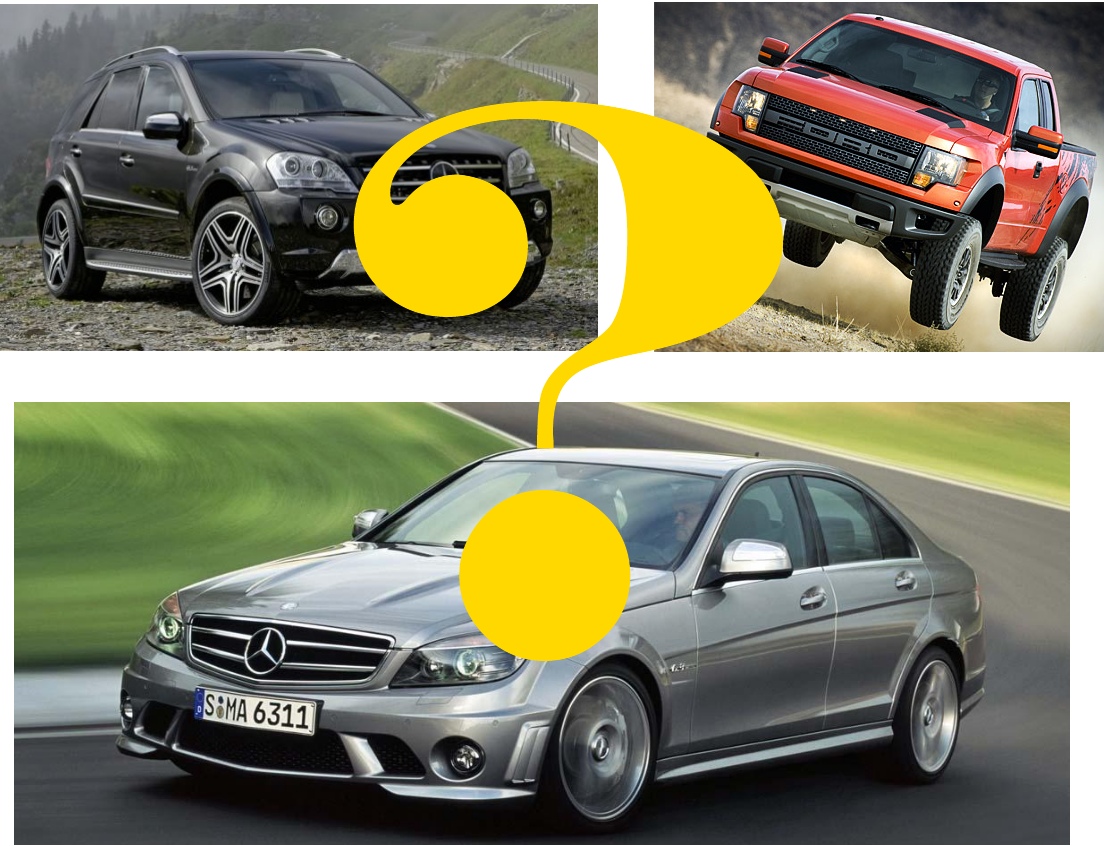
That got me thinking, if I lived in India, driving a C63 AMG would not work, as I would be scared to take it outside, for fear of damaging that glorious V8 on a pothole. Luckily, Mercedes-Benz does have a car that can stand those roads, and with the same engine: The ML63 AMG. Now, I am not a fan of SUVs, but I have to admit, in India, it would make sense. And driving it everyday could still make me smile, just listen to it! (between you and me, it is also the car I drive the most on Forza for some reason). Yes the Porsche Cayenne is faster, but it just feels boring, and the Range Rover V8, honestly, I find it hard to have fun with it.

This made me think about that important question in a different way. Put it this way, if you were to take a car, to drive around the world, in say 2 months, what would you take? The C63 would be a good idea, until you reach the Middle East. And then when you get to Siberia, you are really screwed. The ML63 does look like the best choice.

Until I saw (or rather heard) something from the company I dislike the most: The Ford F150 Raptor.  Yes, it is a pick-up truck, and yes, Matt Farah owns one. However, that V8 produces such a glorious sound and it has a killer feature: That suspension setup! Here is a car made for the Dakar. It would just bounce over those potholes, sending you high in the air, and continue on as if everything was okay. It is a car made for every situation: it seats four, has enough room to fit a whole cupboard in the back, is comfortable and most important of all, it drives well on the road. This could be the ultimate compromise vehicle! Until you try to navigate it through Mumbai traffic that is….. Yes it is doable, but driving a truck every day sort of kills it. Damn, this is hard….

For now at least, I am not in India, nor am I trying to drive around the world (yet). So if you ask me that question, I will just say the C63 AMG.

Posted in Philosophy of driving | Tagged , , , , , , , , , , , , | Leave a comment

French Car Troubles

The French automotive industry is in trouble. This headline seems to be the same for the past 50 years, but here we are in 2012, and it made the front pages again.

The main symptom? The closure of Peugeot-Citroen’s flagship factory in Aulnay-sous-bois. This is causing uproar in France, as it means the loss of 9,000 jobs and the literal disappearance of a whole city. The government even claimed they would get involved and bring the Guillotine out.

This is not new however, and you may call me a pessimist, but the plant will close down and we will forget about it, until the next one.

It happened to Renault before, in the early 90s, and it had caused uproar. Now, they defiantly use the “Made in France” label, which is mostly a lie. They even go to say that they are successful, and better-off than Peugeot. Oh the lies…

Renault, as we all know, is not just the one company. Its biggest asset is Dacia, and that is working well, very well in fact! One of the reasons Renault seems well off, is because of Dacia’s success. Carlos Ghosn may say it’s their electric car venture, but that’s as true as Justin Bieber’s talent. The fact is, Dacia is pretty much keeping Renault alive. Just look at Renault UK: No more Espace, Laguna, Wind, Kangoo, Koleos; yet the Dacia Duster is coming along, and selling. Dacia are low-cost Renaults, built outside of France, sold for cheap, and as a result, they sell. Renault made a lot of pomp and circumstance for the latest Laguna, using words such as ‘refinement’ and ‘quality’. The result? Kind of a flop.
It has come to the point where Dacia models are indirectly replacing Renault ones. Look at the Koleos and Duster, the Lodgy and the Espace. Need I go on?

But everything is okay, Renault have the Tweezy…..

The problem is not due to the cars themselves, it pains me to say. The biggest issue can be explained with the French education system.

You see in France, when you choose to go in to business studies, you do not choose what industry you would like to work in, rather you choose the position you want to hold. If you want to be a CEO, you need very rich parents, who will pay for your insanely expensive education, study 24/7 for about ten years after high-school, and then you can get that position.

Once there, you can be swapped from company to company, regardless of the industry. What counts is the schools you attended, and who you know. It doesn’t really matter if you are good or not.

That is the problem with Peugeot. The current CEO, Philippe Varin came from the steel industry, and joined Peugeot as its CEO straight away. How can he be expected to successfully run a company, if he has no experience in the industry? It was the same for the ex-CEO of Renault, Louis Schweitzer. He was a lawyer, who then went into the French Treasury, then became COO and CEO of Renault, to finally be part of a failed coup d’état in a French energy company, Veolia, with Jean-Louis Borloo, a French politician. (guess what, he was going to be CEO).

Call me old fashioned, but I believe in working to achieve a position, not just getting to it the easy way. The automotive industry is a very complex system. Some gambles pay off, most fail. This will sound corny, but to understand it, you have to be a car guy. (It is not just in France that there is this problem though; look at Dany Bahar and Lotus).

That is one of the reasons companies like Toyota, Honda, Volkswagen or Mercedes-Benz are doing so well. Look at their CEOs:
-Akio Toyoda is a car nut, he regularly races on the Nurburgringe, and launched the GT86 and Lexus LFA
-Takanobu Ito used to be an R&D engineer for Honda back in 1978. He worked on the original NSX, and plans to relaunch the new one.
-Martin Winterkorn worked almost 20 years for Volkswagen before becoming CEO. His predecessor engineered the Veyron. The guy before him was Ferdinand Porsche’s grandson.
-Dieter Zetsche joined Daimler in 1976, and was responsible for Mercedes-Benz rebuilding quality motors, regardless of cost.

I mean it is simple; for the company to be successful, it needs to make appealing products. If the CEO is involved, every detail will be taken care of and a realistic vision will be followed. If the CEO is not interested in cars, how can you expect them to properly guide a car company? Look at Dany Bahar and his rap stars. When he presented those 5 concepts at the Paris Motor Show, it was almost as if he had no idea how a car company works. And when he claimed to go after Ferrari and Porsche, every current Lotus owner launched a Jihad on him.

That is the problem in France, the bureaucracy. Carlos Goshn says he has the answer to the car industry’s worries with his Tweezy. Seriously, who is buying it? And the Fluence? He should realise that one of the reasons people buy a car is for mobility… In the city, yes, but outside, there is no market. And he did not only take Renault there, the Leaf was one of his bright ideas, and that is a roaring success. Peugeot are bad enough with their 508 Hybrid Diesel. But hey, the government has their back with special incentives for hybrids and electric cars. (the fact that 90% of hybrids are not French has not occurred to them yet).

Personally, this short-sightedness is scary. When the French government launched the ‘cash for clunkers’ scam, Peugeot and Renault swarmed the market with cheap small diesels, forgetting about everything else. Now that the scam, sorry I mean scheme, has finished, they are crying because they are not selling their cars. So the government gives them another scheme to artificially boost sales.

Where is the long-term in all this? After all, French CEOs know that they could be head of another company with one phone call to their politician buddies, so why bother?

That said, it is not the only problem for French manufacturers. A lack of international vision, ridiculous unions and failed attempts to raise their image only lead them deeper in the precipice.

R.I.P Louis Renault, Armand Peugeot et André Citroën
R.I.P French Automotive Industry

Disclaimer: I hope I am wrong, for once…

Posted in Auto Industry | Tagged , , , , , , , , | 1 Comment

Is Technology making Cars worse? (Mk1 Golf GTI and Opel Corsa OPC/VXR)

Following up on a discussion on Youtube’s Drive channel (which I can thoroughly recommend), I have a few points to add, following my own experience.

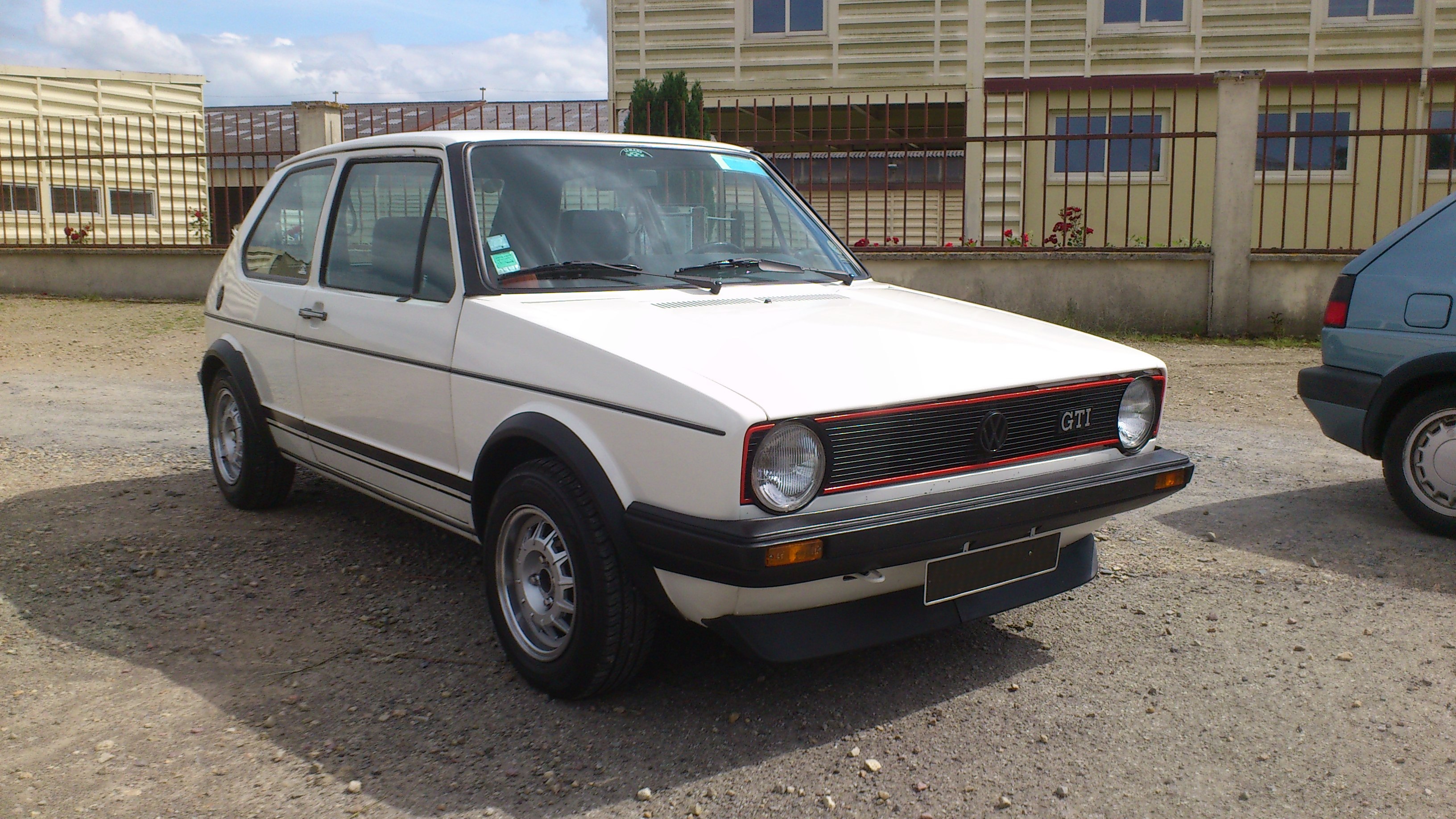
Recently, I was very fortunate to test  drive two very different cars, yet their aim was the same. The first car I drove was an Opel Corsa OPC (or Vauxhall VXR in some countries) Nurburgring edition. This is a small hot hatch, with a 1.4L turbocharged engine, developing 210bhp. The second car I drove was a mint 1981 Mk1 Golf GTI with a small 1.6L fuel-injected engine, developing 110bhp, through a five-speed gearbox.

Now, these two cars are hot hatches, thus have the same aim: Be able to do the shopping in the morning, then spend the afternoon on a race track, setting very decent times, followed by an evening taking you and your date to the classiest restaurant. However, over 30 years separate these two cars, and you can tell that.

The Mk1 Golf GTI feels very special when you drive it. Turn it on, and all your senses come alive. The car is filled with the growl from that small feisty engine, the steering wheel vibrates, as you feel it is desperate to lunge forward. You also smell the engine; the oil, the fumes engulf the inside. The whole thing feels alive. To drive, it is very hard. No power steering here, so you really have to wrestle with the car to make it go the direction you want it to. Once  on the move, the car feels very precise. When you turn the wheel, it reacts immediately, it all feels very connected. The car also corners very well, but here is the good part. At 30 mph, you are already having fun. The limits of the car are within easy reach, so you don’t have to go blistering speeds to feel something or play a bit with the handling. The small wheels (13 inches) have a lot to do with this. I could not help but smile when I drove it. Then the owner took me for a spin, and he made me feel like an old lady when I drove. It was scary, but scary fun, and the fastest you went was 70. The fear was there, but the joy also, the whole thing was a rush of adrenaline. You knew if you had a crash, the only airbag you had was the windshield. Yet you also knew that you were in complete control, and if things went wrong you were the only one to blame. It is a very memorable experience, and every journey feels like an adventure.

The Corsa was a very different thing. Just looking at the numbers you feel impressed. It is the same size as the Golf, but it is almost twice as powerful. You would imagine that it would scare the hell out of me.

It didn’t, it was in fact all very boring.

The problem is, you do not really feel like a driver, just an orchestra conductor. Sure, you do the movements, but it is not actually you who is doing the sound. Speaking of sound, the Opel may have a stainless steel exhaust, inside it is way too domesticated, you hardly felt anything. Turn the key, and you would be forgiven for thinking you are in a measly entry-level Corsa. There is no sense of occasion. Sure, from the outside, it tries to shout ‘sport’ with fake vents here and fake diffusers there (which would probably get you turned away from classy restaurants in the evening), but on the inside, short of the good Recaro seats, nothing really distinguishes it from the usual Corsa. It all feels too unsophisticated, gone are the days of the subtle sporting details of the Mk1 Golf. The electrically-assisted steering also gives little feel, you would imagine you were actually controlling a Forza version of the car. The only feeling you get is when you mash your foot down, and the car pulls forward. Then, you are greeted with copious amounts of torque-steer, which is actually quite fun. Driving the car at normal speeds also is not rewarding. Yes, it may have excellent Bilstein suspension that give the car great handling, but they also feel very firm, with fairly bad damping, bouncing all over the place, and overall, it all feels very muffled. To really get some feel, you have to drive at two, maybe even three times the normal speed limit to get even a morsel of feeling.

And that is the problem with cars today, they are way to good! The Corsa, for example had 18 inch wheels; something unheard of in 1981. Yes the car corners well, but to feel the corner you have to go three times as fast as in the Mk1 Golf. It seems as if cars today are engineered to be the best on paper. The numbers are very amazing, that is true, but when you drive it at normal speeds you do not feel anything, because it is that good. Yes, the car will go around the Nurburgringe in less than 9 minutes, but every day, on the commute to work, we would also like to feel some fun or emotion. Cars today are designed to go too fast, making them more dangerous. But then they are safer as well, so you don’t really care that you have to go faster. To feel like you are on an adventure in the Corsa, you have to go the speeds only possible by a Formula 1 in the 1980s. And even then you don’t hear the engine. And because of all the electronics, you would be unaware of the speeds you are doing, because doing 100mph felt like doing 30.

People today want their car to do everything, so the driver feels too insulated from the driving experience. If a car came out today, identical to the Mk1 Golf, it would not sell, because it would be  deemed too unsafe, too noisy, too uncomfortable, and would not even have Bluetooth connectivity. We have to face it though, it seems that nowadays, buying a car is more about showing off, than about the driving experience. Someone who buys the Corsa would boast about the overboost function, and probably never use it. We expect too much from the car that they have become too good, and we are paying for it, by sacrificing emotion and feel.

Is technology making cars worse? For a daily driver, not really, as arriving to work all sweaty and on an adrenaline rush may be a bit tedious week after week. If you want to drive cars for fun, though, yes. And that is why passionate consumers always buy vintage cars, running away from the new ones. In this case, they knew more about fun the old days.

Posted in Car reviews | Tagged , , , , , , , , , , , | 3 Comments