Do consumers still aspire to performance cars?

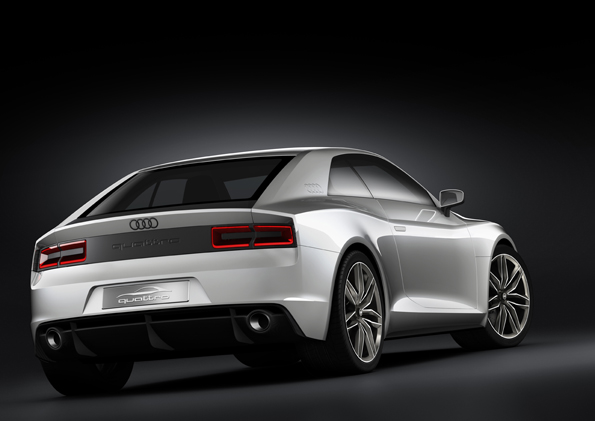
The news hit many Audi fans last week. Audi, in all its marketing knowledge, decided there was no demand for its planned Quattro concept. What a pity, I really wanted to see it. Not only did it have the heritage of the original Quattro, a car that Audi has everything to be thankful for, but also it looked cool. It was the sort of Audi the true petrol-head wanted, not something designed for people who just buy cars. After the superb Audi TTRS, it would have been great for them to launch another good sports car, not some disappointment like the RS5.
But no it was not meant to be.

Instead, they have decided to push for a small crossover SUV, in the form of their Crosslane Concept, a concept so popular, I had to look it up before writing this. They cite the Range Rover Evoque’s success as a factor to this. They are true on this one, the Evoque is a huge benefit for Range Rover, they are selling them by the truck-loads. It may be fairly good off-road, but over 99% of them will never see dirt as their environment of choice is the city. It is small, stylish and rugged. A bit like a designer pair of Timberlands. And Audi wants to cash in on this success. BMW are already present on this segment with their Mini Countryman, so in a way, it does make sense for Audi to bring out the concept, even if we cannot really care about it.

But this got me thinking, with SUVs still a huge market, which goes down once, to only grow stronger later on, is it just a case of consumers changing aspirations? We thought SUVs would die off with rising fuel prices and environmentalism, but as the Evoque has shown us, demand is still very high. What is it that keeps attracting people to them? It is not the practicality and space, because mini-vans used to be way better for that. Fuel consumption, that is a bit of a joke. Social status? Maybe.

The thing is, people like to feel as if they are in control. That feeling you get when things go your way, or when you observe how everyone around you is lost, yet you stay true, is very appealing. That aspect of being control is unbelievably important for our ego.

Humans are known to have had three major ‘shocks’ in their existence. The first one came with the discovery that the earth is not the centre of the universe. Here we were thinking that the Sun revolved around us, we were all powerful. Yet it turned out we were just an unimportant speck of dust. Ouch, that hurts.
The second shock came with Darwin and the theory of evolution. Here we were thinking that we were special, ‘God’ made us in his image, we were superior to every other living being. Turns out that was wrong as well. That monkey we see in the zoo, is just an earlier version than us. How can we feel important?
The last shock, often open to debate, came with psychoanalysis. As Freud loved to explain it, our actions are not only governed by our thought, but by our subconscious. Try as we may, we cannot control that. In a way then, we were no longer in control of ourselves!
The human ego just kept getting hurt more and more. We are not the centre of the universe, we are not the centre of the Earth, and worst of all, we are not the centre of ourselves!

Needless to say, any object that allows us to feel in control and gives us superiority over nature will be cherished.
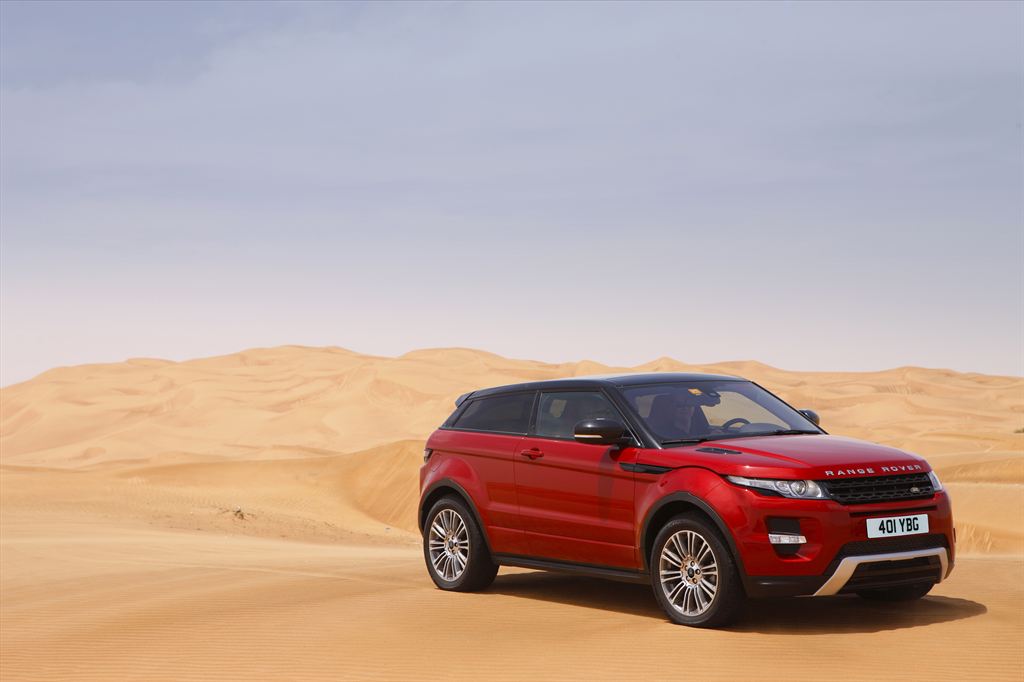
Enter the SUV. A vehicle, that, even if it may be rubbish off-road and uneconomical, gives us the impression that we can face anything. So what if your BMW X3 will never go up a grassy hill, it looks like it can! Your Range Rover Evoque? That could go through Death Valley, so if you want to, you can cope with whatever nature throws at you. And when that single day of snow comes in Europe, oh how happy the SUV drivers are. They will mock the small saloons as they try to go out in the snow. Yes, the Audi Q5 may stay in the garage, (the weather-man recommended you stay inside and avoid all trips), deep down you know your SUV can cope with those whole two inches of snow. With the SUV, you believe you can compete and dominate nature with ease. Moreover, with their huge size, you also get safety and road superiority (well they like to think so).

Yes, even though we like to act evolved and all, we still follow the ‘might is right’ rule. The person with the bigger car tends to win any argument, so the SUV is perfect for the city. Those scooters and Smart cars are mere peasants, designed to be squashed by your 22 inch wheels and adjustable suspension.

We have spent years demonizing speed, and now we are paying the consequences of it. A fast car is no longer any use, since we cannot actually enjoy it. Therefore people turn to SUVs, which allow them to dominate nature and the city. In the process, they also get disinterested in cars altogether, pushing manufacturers to abandon great car projects, in order to focus on the plain old boring….

Sad, but true.
Posted in Philosophy of driving | Tagged , , , , , , , , , | Leave a comment

An electric future from the other side?

Let me put things straight: I am not a fan of electric cars. I think they are unemotional and too restrictive to bring the freedom and lifestyle a car normally brings. But let’s put aside my difference. I will try to be objective on this one.

Battery-electric cars are “in”. That does not mean they are the solution, but it does mean more and more manufacturers are putting some thought into them. Take the Renault-Nissan joint venture. Nissan brought out the Leaf (supposedly an electric car that is just like a normal car), Renault brought the Tweezy (to deal with the issue of high cost), and is planning a whole line-up of electric vehicles. Then you have Tesla, moving into second gear with the Model S, which does seem like a good car, the Peugeot-Mitsubishi iOn-iMiev, the Mercedes B-class EV and various others. Take plug-in hybrids then, the Chevrolet Volt, the Fisker Karma, that Focus, the list goes on. Like it or not, electric cars are no longer the dreams of eco-warriors; it is now easy to find one. How you manage to use them though is another issue. I’ll just focus on supply here, to stay objective.

So the big names are there, but when searching a bit more, I remembered, there was an electric car out there before, that people bought and used (they sold 4,600 in fact, over 7 years). No, not the General Motors EV1, something more recent. Think about it, you have definitely seen one. Top Gear showed it very often and kept blowing them up. Walk around central London and you will definitely see one. I am talking about the G-Wiz.

Now, unbeknownst to a lot of people, the G-Wiz is actually an Indian car, created by a company called Reva Electric Car Company. Reva was a joint venture, created by Chetan Maini in 1994 with an American company, Amerigon Electric Vehicle Technologies. In 2001, the joint venture launched the Reva. It was a very basic car, with basic technology and fairly bad performance, but here is the good part: it was cheap. In the UK, it sold for less than £10,000. Today Renault is trying to make the headlines with their comparatively priced Tweezy, which is actually less practical.

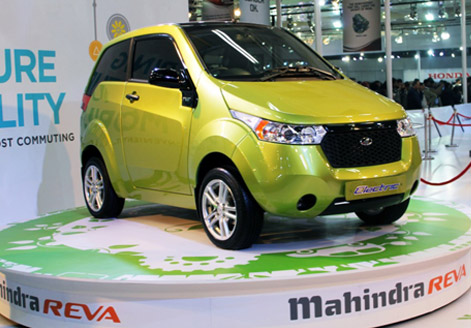
When searching a bit more, it turns out Reva is now owned by Mahindra & Mahindra of India, and still exists. In fact, they are about to launch a new car, the NXR, which is bigger, more practical, better performing, and actually looks like a car (to some extent). It is still going to be cheap (for an electric car) and produced in a completely green way. The new factory complies with very high environmental standards, and tries to use as little electricity as possible. On their website, they even talk about solar charging stations (Sun 2 Car), quick-charge options and being able to power your house (for a short period) with your car (Car 2 Home). Sounds familiar? Should do, because Tesla and other manufacturers are promising the same thing with their future vehicles. But the advantage for Reva is their car is cheap, and have a potential one-billion plus market on their doorstep.

Funny isn’t it? An Indian company seems to be getting there first, doing what the bigger more established players are trying to do (in this case bringing out a green, usable and economical electric car to the public). In management speak, they call it ‘reverse innovation’, when innovations from a “developing country” get adapted to “developed countries”. The Renault-Dacia Logan is a good example of that.
Yes, I am not a fan of the Reva, but I do appreciate their effort. They are continuing in the same line as Tata, trying to put India on the global automotive map. I do hope their car will sell well around the world. Since the beginning, the automotive industry was ruled by European and American brands. Then the Japanese and Koreans came along and showed us how to make good cars for cheap. But now, it may be time for a new player to enter the market. I doubt it will be China, they seem too preoccupied with making rip-offs. It could be India. They have been making cars for over half a century now, and new ambitions are very high. Tata and Mahindra-Reva are trying a new way to conquer the rest of the world: with ‘green’ cars. Tesla and Fisker do have good cars, but they are aiming for the top-half of the market. The two Indian companies are aiming for the bottom-half of the segment; they can co-exist in the perfect world.

In the interest of objectiveness, I will say that this is a good thing. More electric cars will help save fuel, so car enthusiast like myself can drive our classics over the weekends and enjoy them more. Moreover, these electric cars do make perfect sense in the city, where there is stop and go traffic all the time.

There, done. Now, where can I drive the latest Corvette ZR1?

Posted in News | Tagged , , , , , , , , , , , , | 2 Comments

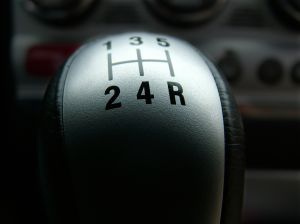
The art of driving a manual

Photo used under Creative Commons License. Original author: RamberMediaImages (http://www.flickr.com/photos/rmgimages/)

Following my last post on whether hybrids can be cool, I feel there is one point I have to raise. As awesome as the 918 Spyder, or even the future Ferrari F70, will be, they do have one fatal flaw. They may be superb driving machines causing litres of adrenaline to flow through your brain each time you press the pedal, yet they will still remain very virtual in a way.

You see, even though cars are becoming increasingly efficient and quick, they tend to do more and more of the task of driving, leaving you with simply turning the wheel. Press the accelerator in some cars, and it will be the car that decides how much power to produce at the wheels. Cars are now digital. Yes, they are still fun, but at the end of the day, the driver is no longer involved, he is just there for the ride.

There are lots of elements at play here, traction control, electric steering, monster ECUs, and other various gizmos, yet there is one element that started this trend, and it dates back over sixty years. Yes, it is the automatic gearbox.
You see, in an automatic car, the only thing you have to do is modulate the throttle and brakes, and steer. The task of driving is rendered so easy, even a child can master it at their first try. The connection between man and machine is no longer there. With an automatic, the car decides in which gear it wants to be and what power to apply.

With a manual car, you are in control. The human plays the link between the engine and the speed. Moreover, it is complicated enough, so that simpletons avoid it. Want to see a bad/uninterested/lazy driver? Look for the automatic.
When driving a manual, you decide at what revolutions you want the engine to run. Want to hear it sing? Then just let it run!
The act of changing gear in a manual is simple, yet satisfying. Mastering that perfect gear change gives you a good feeling, similar to mastering that perfect soufflé. Press the clutch, change gear and release the clutch at the optimum moment. Sounds easy, but not a lot of people can do it perfectly. I’ll admit, even myself I tend to mess it up sometimes, mainly because I am not focusing. People who drive manuals have to be focused, so are less likely to make mistakes then, making them better – and safer- drivers.

But just like that perfect soufflé, the gear change can be done in a wide variety of complexities. When braking and down-shifting in a rear-wheel drive car for example, it is best to heel-toe it, giving the engine a blip of throttle while changing gear, just before releasing the clutch, in order for the engine idle to mach rev speeds. Forget this in a muscle car for example, and you severely risk doing a 180 at speed. In some older cars (with no synchromesh, or to lower synchromesh wear), you also have to double clutch when changing gears: press clutch, shift in neutral, release clutch, give a blip of throttle, press clutch again, change gear and release clutch. Easy no? And all done in a fraction of a second.

The perfect gear-change is vital for a smooth drive. I will even be corny, but to me, a car with a manual gearbox ensures a ‘pure’ drive. Moreover, a car cannot get away with a bad gearbox. If the gear change is squishy and imprecise, you know it straightaway, since you feel it. The gear change needs to be a work of mechanical perfection. In an automatic, the gearbox can be really bad, but if it does its job, you will hardly notice it. A car cannot get away from a bad gearbox.

It is sad to see newer cars ditching the manual option for double-clutch semi-automatic or fully automatic units. The reason why? Efficiency and emissions. Because humans are imprecise and prone to failure, car companies prefer to have a computer do the gear-change for you. That way, the gear change can be done as quickly as possible, and even be programmed to lower emissions by controlling when the car changes gear. The computer is taking over our driving, just so the company can claim lower gas mileage. Pleasure is sacrificed for efficiency. Yes, a car with a DSG gearbox will be ten seconds quicker around the Nurburgring, but it will be less fun, as you are less involved. Yes, you can change the gear yourself, by pressing a button, but really, where is the fun, the challenge?

It is sad to see great driver’s cars such as the Renaultsport Clio, the BMW M5, or the Porsche 911 starting to ditch the manual option for better efficiency. Technology is making our favourite cars worse. Driving fun and involvement are being sacrificed. Yes, humans are inefficient, but are we not allowed to enjoy ourselves? The automatic is just another step to self-driving cars, and then Skynet.

Posted in Philosophy of driving | Tagged , , , , , , , , , | 3 Comments

Could Hybrids be becoming cool?

Readers of my blog will know I am not the biggest fan of hybrids out there. Sure, they allow to save fuel and are technological marvels, but honestly, they are about as exciting as a washing machine. The Prius is a prime example. Find me a car more disconnected with the task of driving and I will applaud you. It is little wonder why they are involved in these accidents, where the owner seems to confuse gas and brake pedals. The Prius really is the car for people who could not care less about cars.

However, hybrids seem to be becoming more interesting. I’ll admit, the Fisker Karma has got me curious, and I would be lying if I said I really liked the Honda CR-Z. After all, when driving in the congested city, you are always stopping and starting, so maybe whizzing around on pure electricity can be useful, and driving an electric car around town is actually pretty fun.

But still, the main problem is that hybrids weren’t fun. They were there to be practical and good to the environment. This is where Porsche stepped in and said “Hey, why not use electricity for more power?”

The result is the Porsche 918 Spyder, and I strongly recommend you watch the Chris Harris on Cars video on Youtube. In fact go watch it now; you’ll see what I mean.

Interesting, no? Here is a hybrid I actually want. Not only because of the ridiculous power and performance, but also because of what it showcases. Using hybrid power to boost performance and make a better car is what it should be all about. I mean come-on, a kick-down function on a hybrid? 100% approved!

Le Mans is starting to see the emergence of hybrids, it is now becoming race technology, and that is a good thing. They will be improved and made more fun. Sure, Honda did try a “fun hybrid” with the CRZ, but it was a bit of a damp squid. Why? Not enough power. The electric motor was used to help the small petrol engine. That’s like a Prius. But what if, say you take a Toyota GT86, which has a pretty good engine, and add a hybrid power-train to help the engine, and increase the power and low-range boost, like a turbo in a way. The electric power could be used to power the front wheels at low speed. That would be one amazing car. Think about it, drive electrically around town then go for a wild ride in the mountains, where the engine will not feel out of puff in steep inclines. The only issue would be the weight gain, as batteries are heavy.

Here’s the thing. Hybrid cars as a solution to the oil crises is a stupid thing. The only solution is an engine that does not use oil. 100% battery-electrics are not the best also, I still maintain that hydrogen is a way to go. However, hybrids as a way to improve performance cars, making them more practical at the same time, I cannot hate.

I used to not be a fan of Porsche, but with the 918 Spyder, I can only applaud them. They are making hybrids desirable!

On a side note, subscribe to the Drive Channel on Youtube, you will not regret it!

Posted in News | Tagged , , , , , , , , , | 2 Comments

The old (2008) Hyundai i10, the ideal small car?

The small car is something we now take for granted in most parts of the world. In Asia, they are commonplace, Europe, they are useful, however in North America, they seem to come and go with each new oil crisis.
The small car is something very important. A form of transport, affordable to the common man, designed to to everything a big car can do, for only a fraction of the price. The small car was almost literally invented by the French with the Peugeot Bébé of 1905. It was very useful for early XXth century France, as most small towns still had narrow medieval streets. The small car was a great way to go where the horse could go, but where the bigger Bugattis or Delahayes could not. The French love small cars, and front wheel drive. The British too, with their Minis and Austin 7s.
They liked to think they ruled this segment, but just like the British Empire, their rule may be have come to an end. Just look at the new New Mini. Not much small there, unless you are in the USA.
The Japanese then took over, and more recently, the Koreans now have their vehicles on the market. They have existed for some time, but the reason I am mentioning them now, especially the Hyundai i10, is because they are actually very good, better even than the established players.

You may be wondering why I chose to write about the older 2008 Hyundai i10. Two reasons: Firstly, green thinking ruined the newer one. One of the main criticisms of the new Hyundai i10, is that the handling is really not very good, and overall refinement is down, partly due to the new low resistance small green tires. Yes, in order to save CO2 emissions, Hyundai essentially ruined the i10. The second reason, is that the original i10 was the first Korean car that could easily lay claim to being one of the best small cars on the market. And to add to that praise, you find it almost all over the world! Ford may be trying to sell you the fact that they are now making One Ford for One World, but the fact of the matter is, the Japanese and Koreans have been doing it before them, and are better at it.

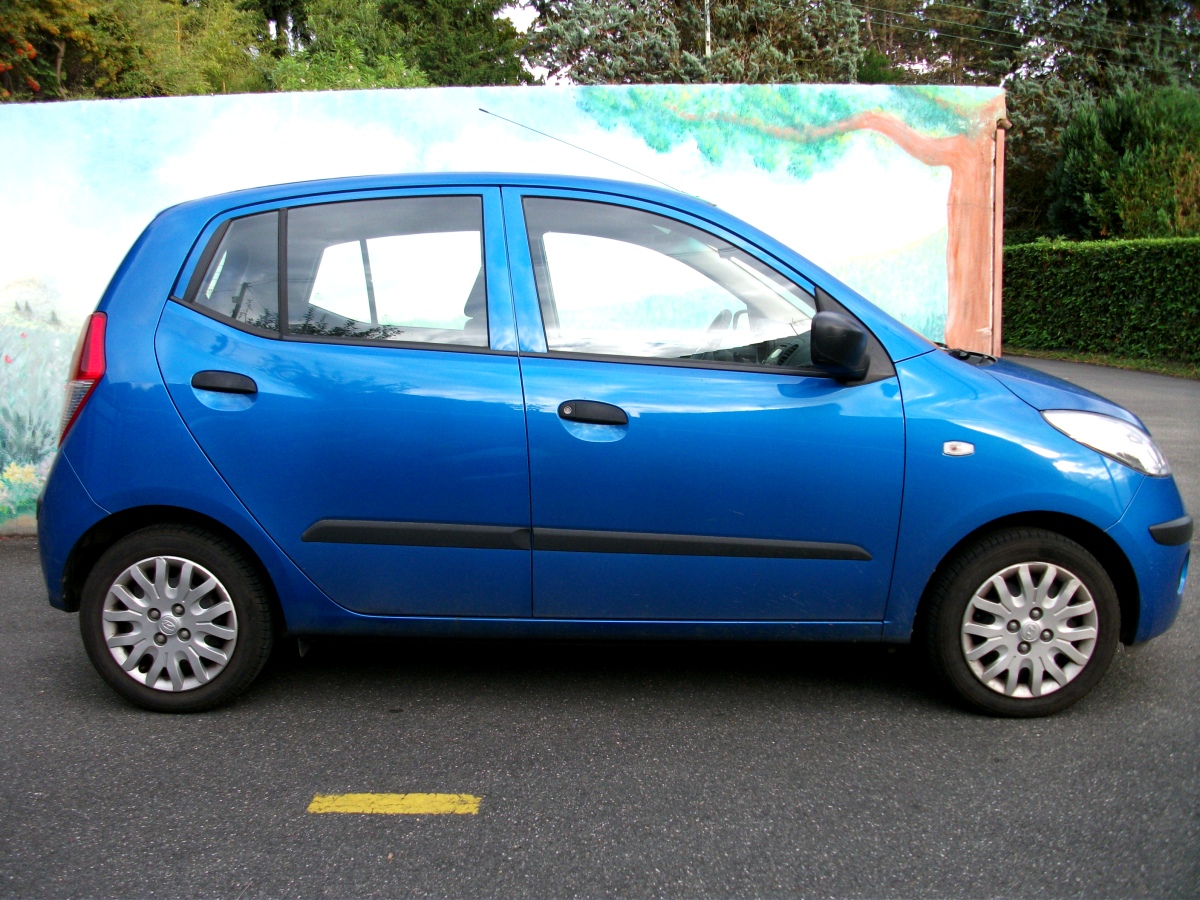
Anyway, back to the i10. The exterior does take a little getting used to, but then again, which small car doesn’t. The first thing you notice is how tall it is. The reason it is so tall, is because of the small footprint of the car. In order to give the inside the feel of being in a big car for such a small body, the height was raised so that once you sit down, you feel less cramped than the older small cars. It is useful, but slightly amusing. Feels like this car was made for Noddy. The big gaping mouth makes it feel as if it was an Anime, but overall, it does look good, bar the huge rear tail-lights. The point I love most, is that, just like the original Mini, the wheels are at each corner of the car. This promises to give it good handling. The i10 only comes as a 5 door, and the reason for this is the focus on practicality.

Once inside, you can see why. This car was designed partly for Indian markets, and over there, the amount of people you can squeeze in a car is an unofficial selling point. It may be small, but this little i10 can easily fit four in great comfort, and even five, with some squeezing, which is impossible in a Twingo or Fiat 500 for example. Legroom is not the best in the back, but in the front, it feels just like a normal sized car. Visibility is also excellent (thanks to the high roof!), making the car perfect for manoeuvring around town.

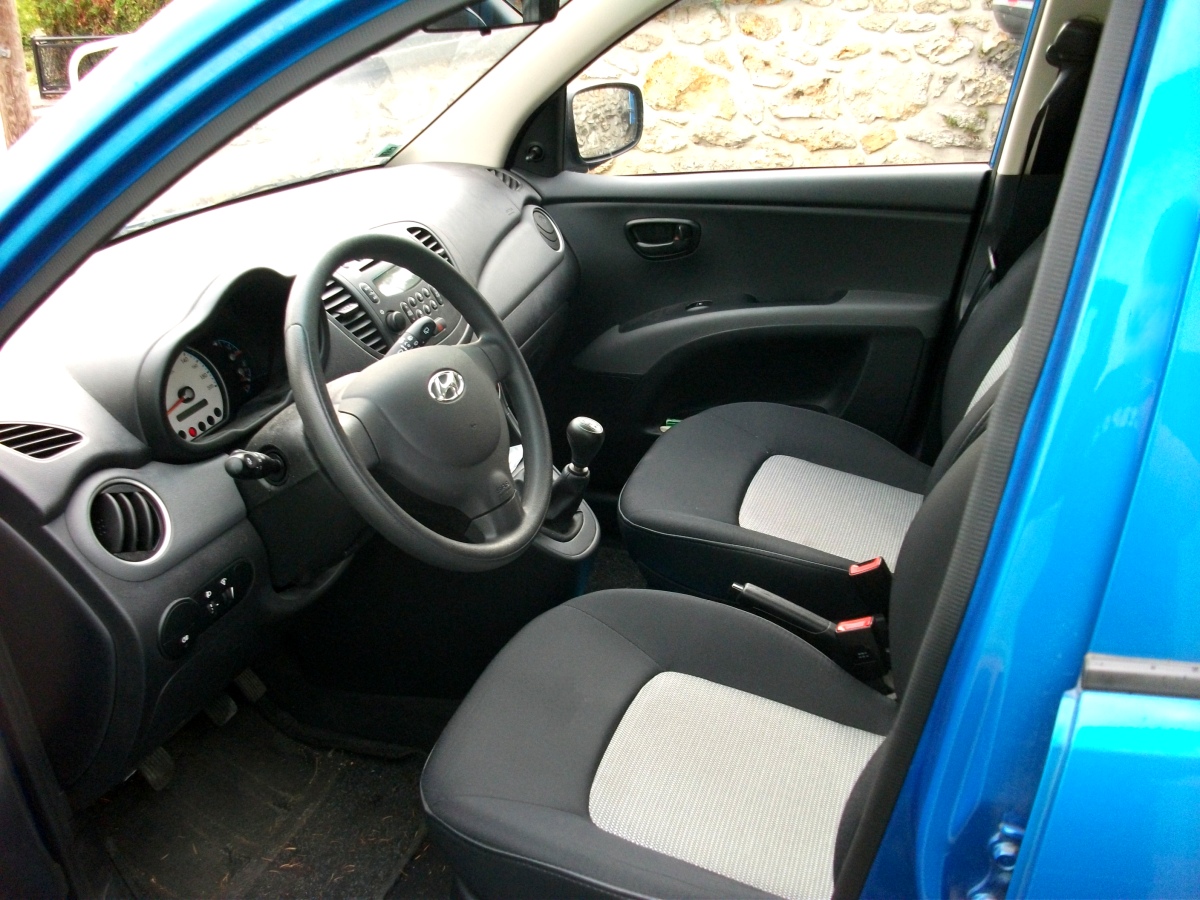
But here’s the great part. We remember Hyundai’s of old being made of nasty plastics that would squeak and crack, with about as much design as a Tetra Pack. The i10 brought a change to that. The dashboard looks good, even if it is simple. The plastics, still hard, are well put together, and very pleasing to the eye. Compared to the Twingo, this car feels miles ahead in terms of quality. Overall it feels like it will last for a very long time. The seats may offer no bolstering, but then again, they are comfortable enough, and the gear-lever and steering wheel are well placed, nice and close together for quick shifting. Yes, you may mock, but it can feel like your driving a small rally car (bar the very high riding position).

And this brings me neatly on to the dynamics of the car. Yes, it may be Korean and made in India, but you know what, it is fun to drive! The engine may be a small 1.2 litre (and that was the bigger option) developing 75 bhp, but it loves to rev and is very sprightly when you play with it. Zipping around town is fun, and even on normal roads it feels at ease. Past 5,000rpm it does run out of juice though, but it does have enough low-range torque to make quick dashes between traffic lights. The sound is nothing special, though it does sound better than your average econobox four-banger. Run past 3,000rpm and it does genuinely start to howl. I wonder what it would give with a better exhaust system (only out of curiosity!). Regarding handling, that is another surprise. A wheel at each corner makes for good road holding, and overall the i10 feels very agile. That said, there is considerable body-roll when you really push it, followed by lots of under-steer. Brakes are also pretty good, though nothing to write home of. The ride is comfortable enough, even if it does tend to bounce a bit on bumpy roads, and feels quite firm at times. Gear changes are quick and easy, maybe a little imprecise st speeds, but okay for the usual 1-2-3 shift around town. Steering is perfect around town, but seriously lacks feel for performance driving. Then again, it is not really what the car is made for.

In the city, the i10 is the perfect car. It is agile, very quiet at low speeds and practical. The really surprising part is that it is equally able in between cities and even on highways. Sure, past 60mph, there is considerable engine and wind noise, but nothing unbearable. You could imagine going for a week-long holiday in this car, if you pack lightly enough to fit in the small boot.

That is why I love the i10. The Koreans have learnt their lesson and produced an excellent car. It is much better than the Aygos and Twingos of this world. Too bad they ruined the later one with those silly tires. Oh, and the name is really annoying!

Posted in Car reviews | Tagged , , , , , , , , , , | 2 Comments